

A calm down corner is a dedicated, low-stimulation space where a child can practice managing big feelings, and the simplest version works right now: one comfortable seat, one visual cue like a feelings chart, and one calming tool such as a putty ball or breathing card. That’s it. Short, screen-free resets of just a few minutes are what make the space effective, not the amount of gear you buy for it.
TL;DR:
- A calm down corner should include only a few essential items: a comfortable seat, a visual feelings chart, and one or two calming tools to prevent overwhelm.
- Visual supports and tactile tools should cover sensory categories like comfort, visual cues, and proprioceptive input, with optional auditory devices only if they are calming.
- Practice routines when the child is calm using simple scripts and visual guides to ensure proper use during stressful moments, not during meltdowns.
- Building the space is quick and inexpensive, with DIY options like glitter bottles and breathing cards, and should be rotated monthly to maintain interest.
- A successful calm corner is used regularly for rehearsal and reset, with adult involvement, rather than viewed as a punishment or a last resort.
Table of Contents
- Calm Down Corner Ideas: What Belongs in Each Sensory Category
- How to Set Up a Calm Down Corner in Five Steps
- Calming Corner Ideas for Home, Classroom, and Tiny Spaces
- Teaching the Calm Corner Without Turning It Into a Punishment
- DIY Calm Corner Projects You Can Build Tonight
- Where Edhed Learning Fits Into Your Calm Corner Setup
- What Actually Makes a Calm Corner Work
- Turn These Calm Corner Ideas Into a Ready Kit in Minutes
- Sources
- FAQ
Calm Down Corner Ideas: What Belongs in Each Sensory Category
The mistake most parents and teachers make is filling the space with too much stuff. A crowded basket of toys creates decision paralysis for a child who is already overwhelmed, and one seat, one visual, and two or three tools tends to outperform a packed bin. What actually matters is covering a handful of sensory categories, not stacking every item you can find.
Think in these terms when you’re stocking the space:
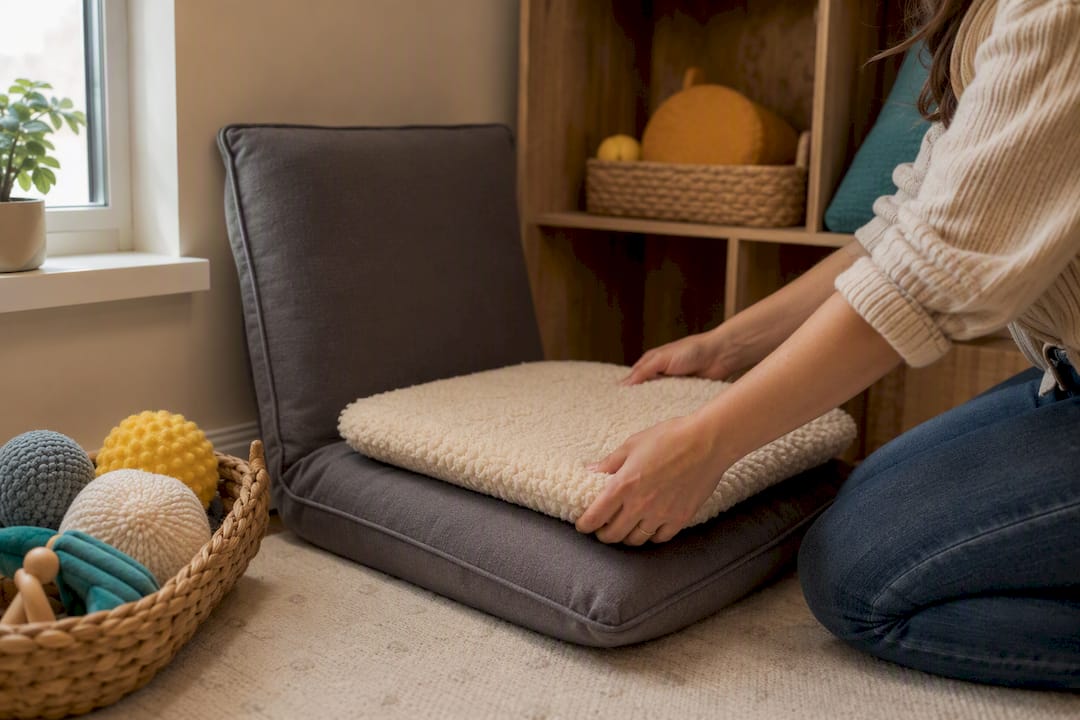
- Comfort: a soft cushion, small rug, or lightweight blanket to anchor the seat.
- Visual supports: a feelings chart, a breathing poster, or a simple “calm choices” board showing two or three options.
- Tactile and proprioceptive input: therapy putty, a lap pad, or a weighted stuffed animal for grounding pressure.
- Auditory options (optional): headphones with quiet music or white noise, useful only if the child doesn’t find them distracting.
- Timing tool: a sand timer or visual countdown clock, since resets work best when they’re short and clearly bounded.
Keep the space screen-free. Research on calm corners shows that screen-free environments with tactile alternatives like glitter jars and printed breathing guides help trigger a parasympathetic response, and even sessions lasting three to fifteen minutes produce measurable calming effects. A tablet or show tends to distract rather than regulate, and it can encourage a child to seek stimulation instead of learning to sit with a feeling until it passes.
Pro Tip: If you’re not sure which tactile item to start with, choose one that applies gentle, even pressure, like a lap pad, rather than one that’s loud or visually busy. Overstimulating “calming” tools defeat the purpose.
How to Set Up a Calm Down Corner in Five Steps
Building the space takes less effort than most parents expect. Follow this order and you’ll avoid the two most common failures: overloading the corner and skipping the teaching step.
- Choose a low-traffic spot you can still supervise. A quiet-down corner doesn’t need special furniture. A calm corner functions as a sensory management tool, so prioritize a nook away from heavy foot traffic over an expensive setup.
- Limit the starting choices to two or four items. Resist adding more until you know what the child actually reaches for.
- Add one visible routine poster. A simple three-step visual (sit, breathe, choose a tool) gives a child something to follow without needing you to narrate every time.
- Practice the routine when everyone is calm. Walk through it together before it’s ever needed for real.
- Set a short timer and plan the return step. Decide in advance what happens after the timer ends, whether that’s rejoining a group activity or checking in with an adult.
Reset the corner after every use. Fluff the cushion, wipe down tactile tools, and replace anything worn out so the space always feels ready rather than picked over.
Pro Tip: Rotate one item out each month instead of adding new ones on top of the old. This keeps the rotation manageable and helps you learn which tools the child genuinely uses versus which ones just sit there.
Calming Corner Ideas for Home, Classroom, and Tiny Spaces
A calm corner for a one-bedroom apartment looks nothing like one built into a classroom with 24 students, and that’s fine. The sensory categories stay the same; only the scale and durability requirements change.
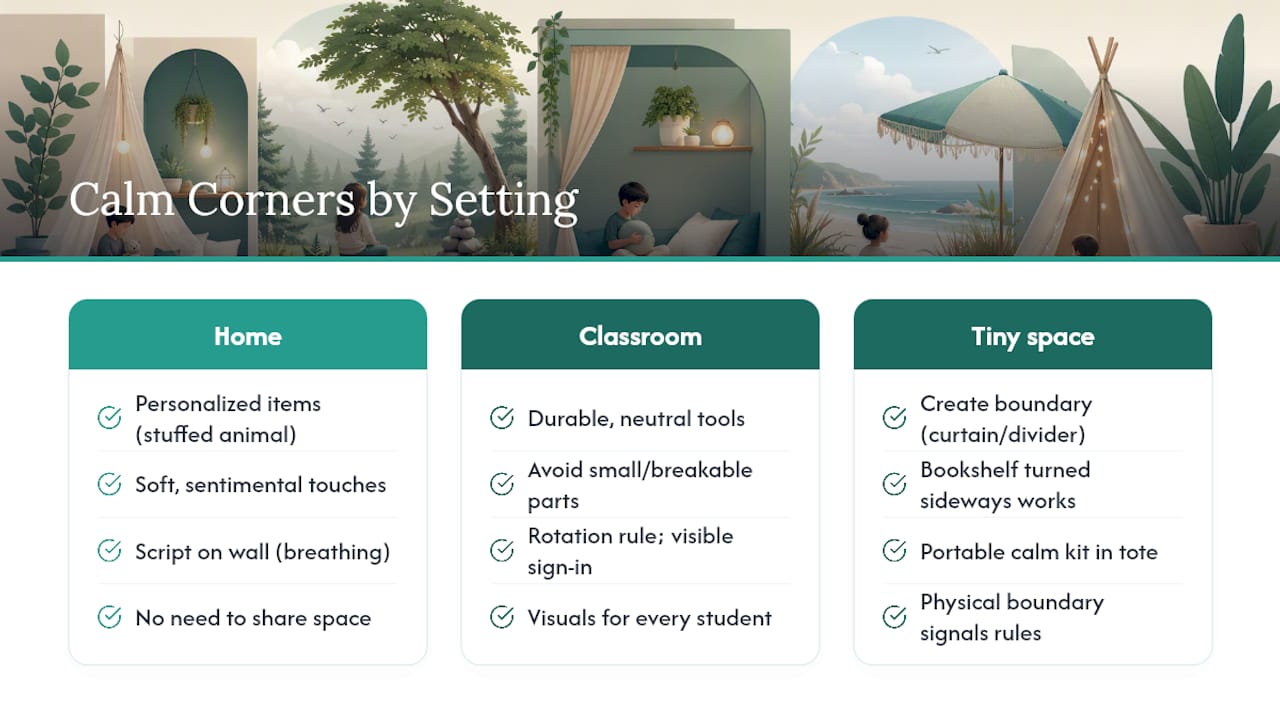
At home, personalize the space with items that matter to the specific child: a favorite stuffed animal, a family photo, or a script taped to the wall that says something like, “It’s okay to feel mad. Let’s breathe together.” Home corners can afford softer, more sentimental touches because there’s no need to share the space with 20 other kids.
In classrooms, durability and neutrality matter more. Skip anything with small parts that break easily, and choose visuals that work for every student rather than one child’s personal favorites. Many teachers build a rotation rule where two students can use the corner at once, with a visible sign-in system so it never becomes a hiding spot for one child all day.
In tiny spaces, a literal corner isn’t always available. A curtain, a bookshelf turned sideways, or a room divider can create the same effect. Physical boundaries signal that a space runs under different rules, even without four walls. A portable calm kit in a small basket or tote works well for families who need to bring the tools to whatever room the child is in.
Age changes the tools, too. Toddlers need larger, choke-safe items and very short routines. Preschoolers respond well to fine-motor tools like squeeze balls and simple lacing cards. Early elementary kids can handle short reflection prompts, like a card asking, “What’s one thing that would help right now?”
Teaching the Calm Corner Without Turning It Into a Punishment
The single biggest mistake adults make is introducing the calm corner during a meltdown. A child’s brain in survival mode can’t absorb new instructions, so the teaching has to happen during calm moments, not the crisis itself. Rehearsing the routine together, even for 90 seconds, builds the muscle memory a child needs to use it later on their own.
Language matters just as much as timing. Saying “go to your corner” turns the space into a timeout, which is the opposite of the intent. Try scripts built around choice instead:
- “Would you like to sit in the calm corner or squeeze this putty right here with me?”
- “I can see you’re really frustrated. Want to breathe together for a minute?”
- “Let’s go check in with the calm corner and see what might help.”
None of this works without an adult modeling it first. Self-regulation is a learned skill, and co-regulation, meaning a calm adult presence guiding the process, is what makes early practice stick. A child can’t learn to self-soothe by being told to go soothe themselves alone.
The corner should feel like a tool the child reaches for, not a consequence handed down. If a child associates the space with being sent away, the entire strategy backfires.
Common mistakes to watch for: cramming the corner with too many tools, framing it as a punishment even accidentally, and failing to follow up consistently once the timer ends. A five to ten minute daily rehearsal during a calm stretch of the day trains the brain to treat the space as a reset button rather than a warning sign.
DIY Calm Corner Projects You Can Build Tonight
You don’t need a shopping trip to stock a calm corner. Most of the best tools cost under $10 and take fifteen minutes to make.
- Glitter bottle: Fill a clear plastic bottle with warm water, clear glue, and fine glitter. Hot glue the lid shut for safety, and let it settle for a full day before use so the glitter swirl looks smooth instead of clumpy.
- Breathing cards: Print three or four simple breathing patterns (like “smell the flower, blow out the candle”) onto cardstock and laminate them. Cards work better than posters because manipulating a physical card during a stressful moment gives busy hands something to do, cutting down on decision paralysis.
- Fidget basket: Gather six to eight quiet, non-noisy items, like a squeeze ball, a spinner, or a textured fabric swatch, and rotate two out monthly.
- Lap pad: For children sensitive to being fully covered, a small weighted lap pad often works better than a full blanket. A DIY version made from a rice-filled fabric pouch gives similar pressure without the cost of a therapy-grade product.
Pro Tip: Skip anything with loose beads, small magnets, or choking hazards if toddlers will share the space. Simple, washable materials outlast anything fragile or fussy.
Where Edhed Learning Fits Into Your Calm Corner Setup
Shaun, an author, helped shape this guide from classroom-and-home resources designed to support parents, teachers, and therapists. The resources specialize in printable kits and visual courses designed to turn abstract emotional concepts into hands-on tools. The feelings and emotions taster course supplies ready-made visual cues for a corner’s core routine poster, the neurodivergent regulation bundle offers sensory-friendly activity sheets for kids who need more tailored support, and the earthquakes digital course shows the same downloadable format applied to a completely different subject, useful if you want a sense of what else the library offers.
What Actually Makes a Calm Corner Work
The corners that succeed aren’t the ones with the most stuff. They’re the ones where an adult sat down with the child during a quiet Tuesday afternoon and practiced the routine for two minutes, with no crisis in sight. That single habit, repeated a few times a week, does more than any amount of decor.
If you try one change today, make it this: pick one calming tool, one visual cue, and rehearse the script once while everyone’s relaxed. Everything else can wait.
— Shaun
Turn These Calm Corner Ideas Into a Ready Kit in Minutes
Building a calm corner from scratch takes longer than most parents and teachers have time for between school pickup and dinner. Printable kits built around the described sensory categories allow assembling a prepared layout instead of designing one from scratch.
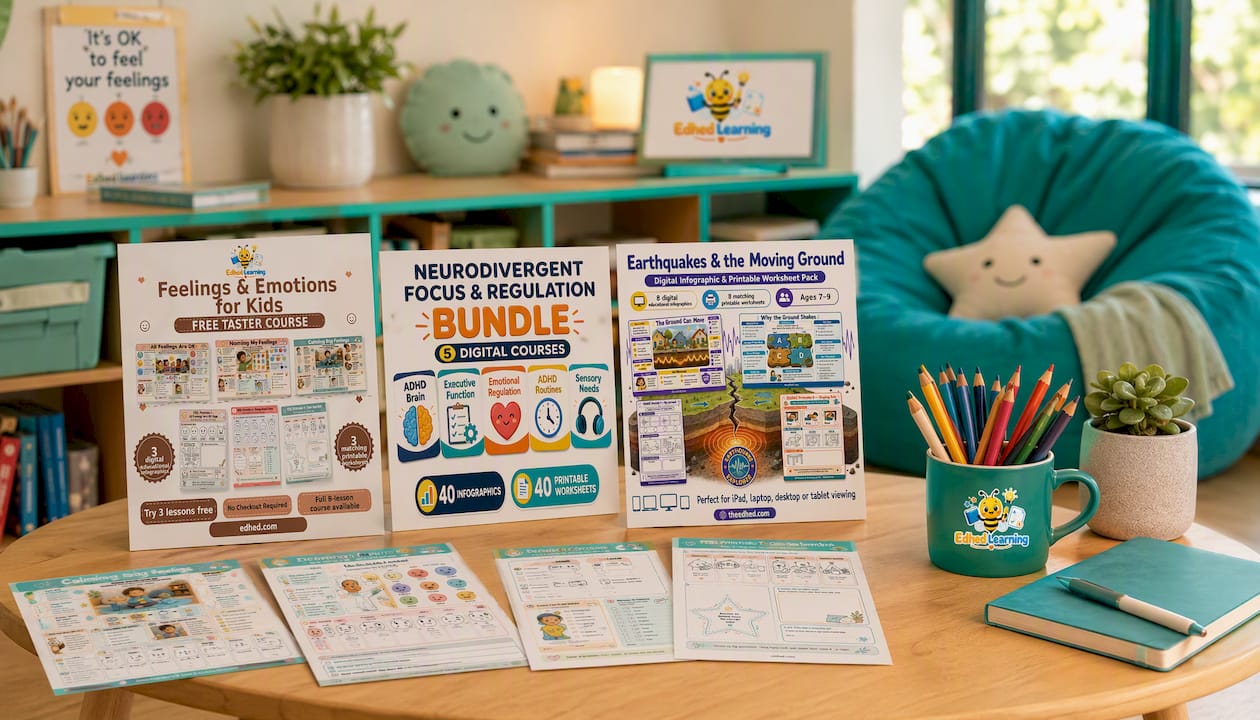
The free feelings and emotions taster course gives you a feelings chart, breathing visuals, and three short lessons you can print and laminate tonight, covering the exact visual-cue and breathing-card pieces this guide walks through. For children who need more targeted sensory support, the regulation worksheets bundle adds activity sheets built for neurodivergent needs, so the corner flexes to fit the child instead of the other way around. Both download instantly, which means you can have a working setup on the wall in under ten minutes rather than waiting on shipped supplies.
Start with the free taster course, print the core visuals tonight, and add the regulation bundle once you know which tools your child actually reaches for.
Sources
- Designing a calm corner for stress relief and emotional regulation
- Your calm is their calm: co-regulation strategies for infants and toddlers
- Calm Down Corner
- Co-regulation strategies: how educators can support
- How to Create a Calm Down Corner at Home
FAQ
What are some ideas for a calming sensory corner?
Start with a soft seat, a feelings chart or breathing poster, and two or three tactile tools like putty or a lap pad. A sand timer helps keep resets short and predictable.
How do I create a calming corner?
Choose a quiet, supervised spot, limit starting tools to two or four items, add one visual routine poster, and practice the sequence together during calm moments before the child ever needs it under stress.
What should I put in a quiet corner?
Focus on comfort (a cushion or small rug), one visual support, one tactile or proprioceptive tool like a weighted lap pad, and a timer, rather than filling the space with a large toy bin.
What does a calming corner look like in a classroom?
A classroom version usually includes a durable rug or floor cushion, a laminated breathing card set, a neutral feelings poster, and a simple sign-in system so students share the space without it becoming one child’s hiding spot.


